Modern geometric abstract art has a way of captivating our attention. It’s bold, it’s vibrant, and it’s filled with an energy that seems to leap off the canvas. But what is it about these geometric shapes and abstract compositions that draw us in so effortlessly? Let’s examine the world of modern geometric abstract art and uncover why it continues to enchant us, while also taking a look at some of the most renowned artists in this genre.
At its core, modern geometric abstract art is a celebration of shape, form, and color. It strips away the distractions of the real world, leaving behind a distilled essence of visual expression. From the precise lines of Mondrian to the dynamic compositions of Kandinsky, geometric abstract art invites us to explore the interplay between shapes and colors in their purest form.
As far as my work is concerned, we have to go in the wayback machine to see when I used more geometric forms in my work. My painting, Updated Profile (seen below), from 2006 is a nice piece with geometric forms. This is back when I used brushes and sought out specific forms, usually with vertical and horizontal lines. Vague rectangles and squares appear with more organic shapes forming inside of them. These pieces usually only had one or two layers, whereas my current work has closer to 10 or 12. That’s how my work and process has organically evolved, and the hard geometry has vanished from my paintings leaving a more complex composition. Check out my recent compositions while you peruse my original abstract art for sale.

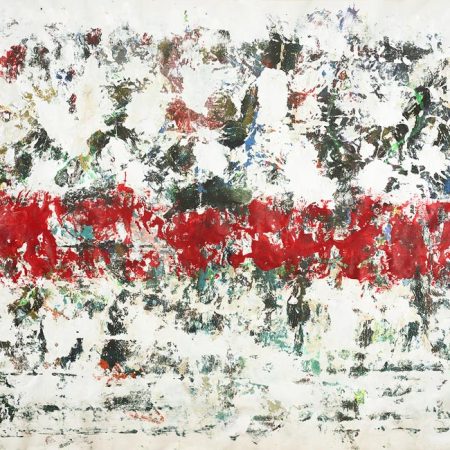
Powder
$10,000.00 Add to cart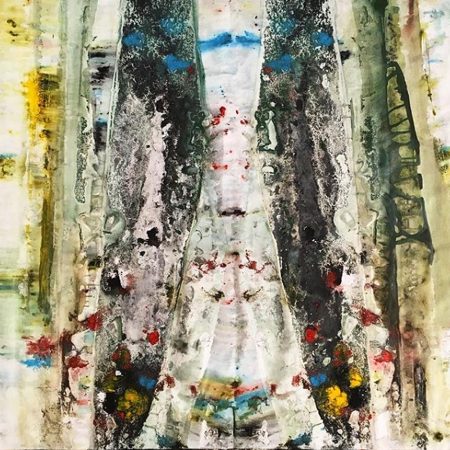
Drone
$6,500.00 Add to cart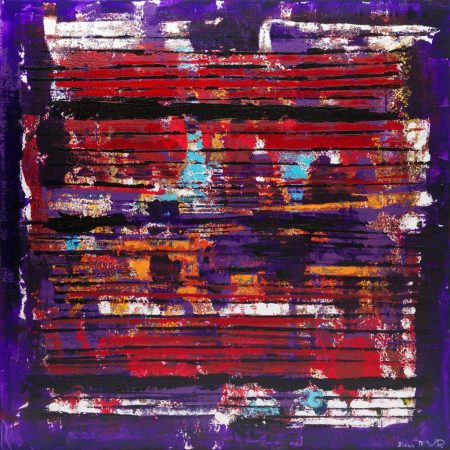
Yorba
$1,400.00 Add to cart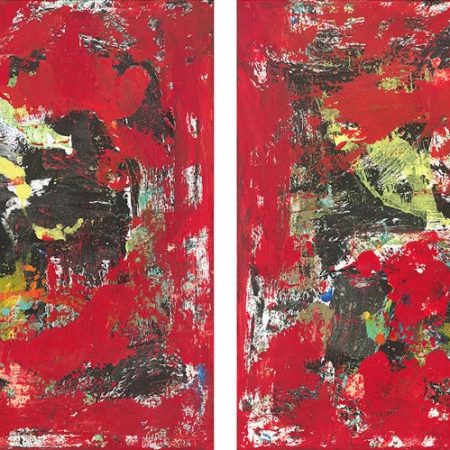
Bison
$2,600.00 Add to cartOne of the key reasons why people are drawn to modern geometric abstract art is its ability to evoke a sense of order and harmony in a chaotic world. Artists like Piet Mondrian, with his iconic compositions of grids and primary colors, sought to distill the underlying harmony of the universe into geometric forms. His paintings, such as Composition II in Red, Blue, and Yellow, offer a glimpse into a world of perfect balance and symmetry, providing viewers with a sense of calm and stability amidst the turbulence of modern life.

Similarly, Wassily Kandinsky, often regarded as one of the pioneers of abstract art, used geometric shapes and vibrant colors to express his innermost thoughts and emotions. His groundbreaking work, Composition VIII, (Wow, Composition was a popular title) is a whirlwind of intersecting lines and shapes, each permeated with its own unique energy. Kandinsky believed that art had the power to transcend the material world and connect with the spiritual realm, and his geometric abstract compositions are a testament to that belief.

Another reason why modern geometric abstract art holds such a strong appeal is its ability to stimulate the imagination and challenge our perceptions. Artists like Kazimir Malevich, with his iconic Black Square, pushed the boundaries of what art could be, reducing it to its most elemental form. By stripping away all representational elements, Malevich invited viewers to contemplate the essence of art itself – a square on a white canvas – and to consider the infinite possibilities that lay beyond.

Similarly, the works of Bridget Riley, known for her op art paintings that play with optical illusions and perception, invite viewers to question their own visual experience. In paintings like Blaze 1, Riley creates mesmerizing patterns of lines and shapes that seem to shimmer and dance before our eyes, challenging us to discern where reality ends and illusion begins.

Moreover, modern geometric abstract art offers a platform for self-expression and experimentation. Artists like Frank Stella, with his bold and dynamic compositions of intersecting lines and geometric shapes, use abstraction as a means of exploring the possibilities of form and color. Stella’s Harran II series, for example, features intricate arrangements of concentric circles and spirals that seem to pulsate with energy, inviting viewers to lose themselves in the rhythm and movement of the painting.

Similarly, the works of Sol LeWitt, known for his geometric wall drawings and sculptures, blur the lines between art and architecture, inviting viewers to interact with space in new and unexpected ways. LeWitt’s “Wall Drawing #370” is a prime example of his signature style, featuring a series of meticulously drawn lines and shapes that seem to cascade down the wall like a waterfall frozen in time.

In conclusion, the allure of modern geometric abstract art lies in its ability to evoke a sense of order and harmony, stimulate the imagination, challenge our perceptions, and provide a platform for self-expression and experimentation. From the precise grids of Mondrian to the dynamic compositions of Kandinsky, from the reductionist simplicity of Malevich to the optical illusions of Riley, the world of geometric abstract art is as diverse and multifaceted as the artists who inhabit it. So the next time you find yourself face to face with a captivating geometric abstract composition, take a moment to immerse yourself in its beauty and let your imagination soar. After all, in the world of abstract art, anything is possible. – Shawn McNulty
Leave a Reply