

Shawn McNulty
Acrylic on Cradled Board
10×10”
2025
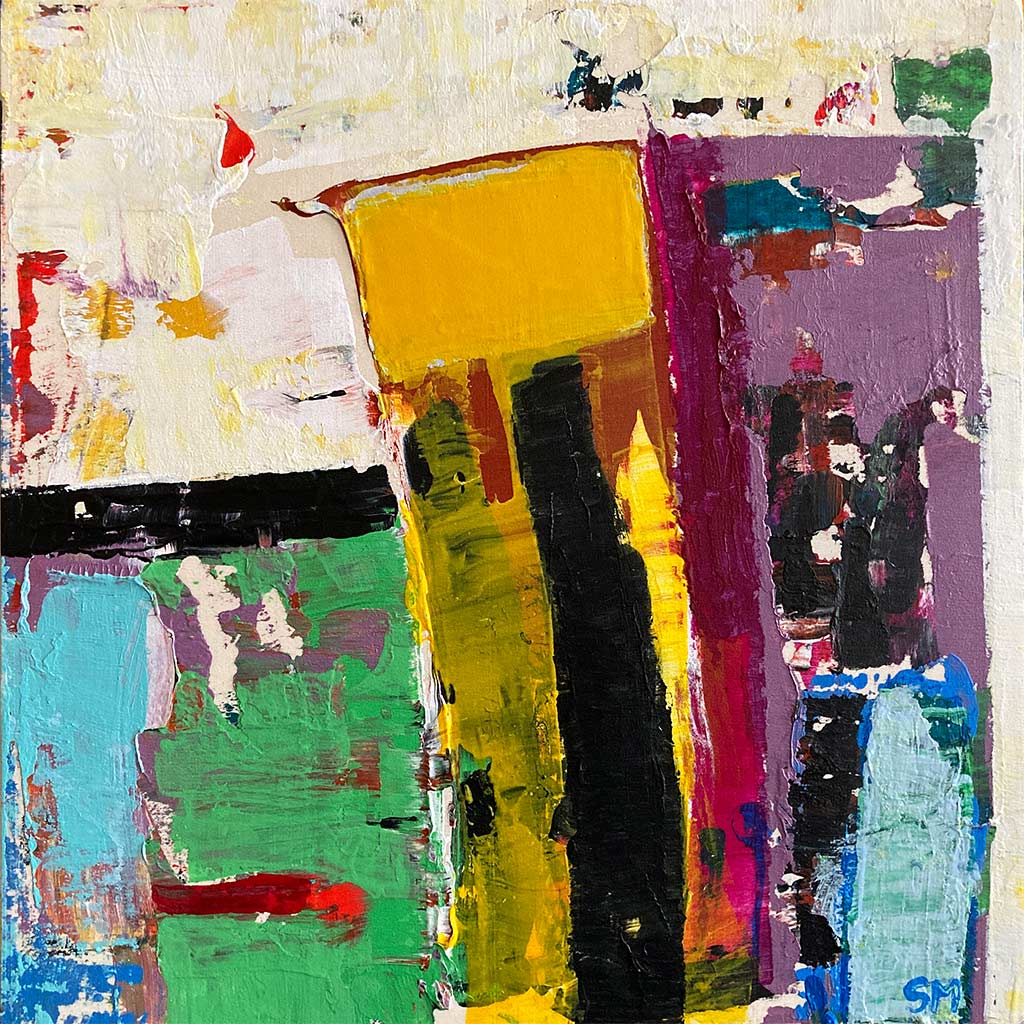
Tempest is an original abstract painting on cradled board by visual artist Shawn McNulty. This painting is is 1″ deep with pine edges, and ready to hang with wire on the back.
The Wild Energy of a Tempest
A tempest isn’t just a storm — it’s a performance. It’s nature at full volume, the sky throwing a tantrum, the wind and rain swirling together in a chaotic kind of rhythm that’s both terrifying and beautiful. The word itself feels dramatic, like something Shakespeare would shout from a stage — and, of course, he did. But beyond literature and poetry, a tempest is something you can feel deep in your bones: that moment when the air turns electric, the light shifts, and the world seems to hold its breath just before it all breaks loose.
If you could capture that feeling — the raw, bending energy of a storm — you might end up with something like the abstract painting Tempest. In it, a tall, twisting purple and yellow structure seems to struggle against invisible winds, leaning and bending but refusing to break. The colors collide and swirl, evoking motion, tension, and resilience. It’s not just a painting of a storm; it’s a painting inside a storm — all chaos, beauty, and defiance mixed into one.
The Nature of a Tempest
Technically speaking, a tempest is a violent windstorm, often accompanied by rain, hail, or snow. It’s the kind of storm sailors used to dread — the kind that could tear sails, snap masts, and swallow ships whole. Today, we use the word a little more loosely, to describe any storm with a certain wildness to it. A gentle rain isn’t a tempest. A tempest is when the sky seems to lose control, when the wind howls through trees and rain slants sideways, when thunder feels close enough to touch.
But there’s more to it than meteorology. The word “tempest” carries emotion. It’s not just a physical event — it’s a state of mind. We talk about tempests of anger, of grief, of love. It’s that overwhelming surge of energy that shakes everything loose, both in nature and within us. And that’s exactly what Tempest the painting seems to capture: not just weather, but feeling. The tall purple and yellow form bending under the storm’s weight looks almost human, like a figure caught between endurance and surrender.
The Build-Up Before the Break
Every tempest has a prelude — that uneasy quiet before things erupt. The air thickens. The colors of the world shift subtly. The sky might turn greenish or bruised purple, light filters through in strange ways, and every sound feels distant. It’s a kind of suspense that both excites and unnerves you.
That same mood lingers in Tempest, where tension builds between colors. The purple structure, regal and upright, seems proud at first — but the streaks of yellow cut through it like lightning, sharp and unexpected. The contrast feels electric, almost humming. It’s that moment right before the first gust of wind hits, when you know something powerful is coming but can’t quite predict how it will unfold.
Then the wind arrives. Trees bend, leaves scatter, and everything that was neatly in place gets rearranged. In the painting, that’s when the structure starts to lean — not broken, but yielding. It’s a perfect visual metaphor for what tempests do: they test the strength of everything they touch. Trees, buildings, people — even emotions. It’s a reminder that nothing is truly rigid; everything bends when the pressure is great enough.
Chaos as Creation
As wild as they are, tempests aren’t just destructive — they’re creative too. They clear away the old and make room for the new. Rain nourishes, winds spread seeds, lightning replenishes nitrogen in the soil. Out of all that chaos, life finds renewal.
In art, that same idea rings true. Tempest is full of movement and turmoil, yet it’s beautiful precisely because of that. The purple and yellow seem to clash at first, but the longer you look, the more you see harmony in their tension. The purple stands for solidity and depth, while the yellow cuts through it with bursts of light — like the sky splitting open during a storm. The tall, bending structure feels alive, flexible, and defiant. You can almost hear the wind in it, see the rain streaking diagonally across the canvas.
The storm doesn’t ruin the structure — it defines it. Just like in nature, the tempest becomes part of its shape, part of its identity. It’s no longer just standing; it’s surviving.
Tempests in the Mind
Of course, not all tempests happen outside. Some are internal — emotional storms that toss us around until we find calm again. Maybe that’s why the word feels so poetic. It describes those moments when everything inside you is in motion — when your thoughts whip around like wind-blown debris, when you feel like you might break, but somehow don’t.
The painting Tempest captures that feeling perfectly. You can see struggle and motion, but also strength. The structure bends but remains standing. The purple is bruised but not broken, the yellow light still flickering within. It’s a portrait of resilience — the kind of beauty that only shows up after weathering a storm.
Sometimes those inner tempests are what shape us most. They strip away what’s unnecessary and show us what’s real. When everything else gets blown away, what’s left is what truly matters.
The Calm After
Eventually, every tempest fades. The wind slows, the clouds drift apart, and the world feels new again — damp, quiet, glistening. That post-storm calm has its own kind of magic. Colors seem richer, the air feels cleaner, and there’s a sense of relief in stillness.
In the final strokes of Tempest, you can almost feel that calm sneaking in. The background lightens, and the purple structure begins to steady itself. The yellow glows softer, like the return of sunlight breaking through thinning clouds. You can sense the aftermath — fragile, peaceful, a reminder that chaos always gives way to clarity.
The Power of Weather and Art
A tempest reminds us that we’re small — that nature, in all its force, can still command awe. But it also reminds us of our own endurance. We can bend without breaking. We can rebuild. We can turn the storm into art.
The painting Tempest takes that truth and translates it into color, form, and motion. It’s not a literal storm — it’s an emotional one, a visual echo of all the moments in life that have tested us, shaped us, and ultimately made us stronger. The purple and yellow tower, though battered, still stands tall — proof that beauty can come from even the fiercest winds.
That’s the real heart of any tempest — in nature or in ourselves. It’s not about the chaos. It’s about what remains standing after the storm passes.





Reviews
There are no reviews yet.