
Mount Fuji isn’t just a mountain—it’s a legend, a symbol, and a living presence that seems to breathe with the land of Japan itself. Rising an impressive 12,389 feet above sea level, this nearly symmetrical cone is instantly recognizable, gracing postcards, paintings, and the collective imagination of travelers across the world. Known as Fuji-san in Japanese, the mountain is more than a geological wonder—it’s a spiritual icon, a creative muse, and a gentle reminder of nature’s dual power of beauty and destruction.
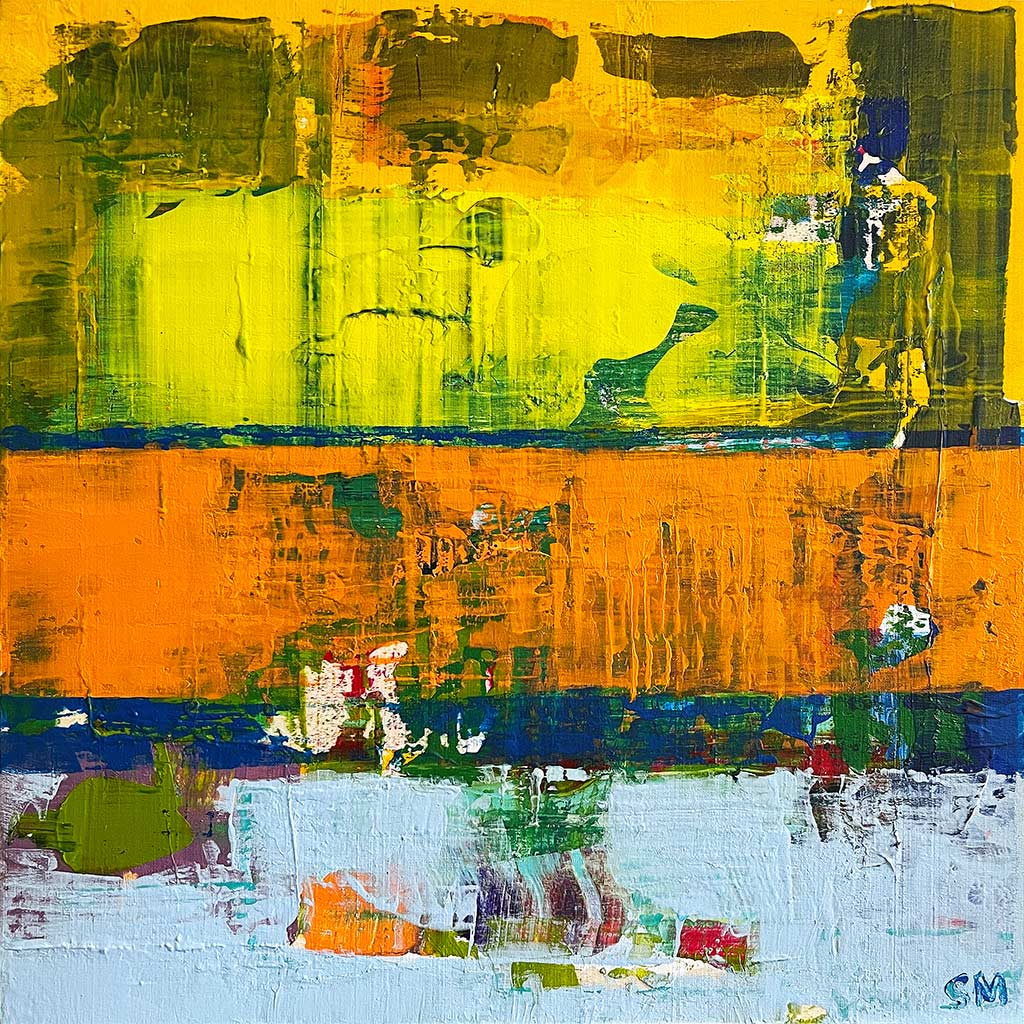
On the same page as this description sits Shawn McNulty’s abstract painting “Fuji,” which captures that delicate balance between opposing forces. The painting features a bright orange horizontal band—suggesting molten lava, energy, and life—over a light blue lower half, evoking ice, serenity, and stillness. It’s a visual metaphor for Mount Fuji itself: fire and ice, chaos and calm, constantly existing in harmony. Like the painting, the volcano embodies contrast—its quiet, snow-capped peak hiding the fiery energy beneath the surface.


The Sacred Mountain
For centuries, Mount Fuji has been revered as sacred ground. It’s one of Japan’s “Three Holy Mountains,” alongside Mount Tate and Mount Haku. In Japanese mythology, Fuji is associated with deities of fire, water, and fertility—forces that represent creation and renewal. Many Japanese people see Fuji not just as a physical peak, but as a spiritual one—a place where the human world meets the divine.
Climbing the mountain is considered a pilgrimage of sorts. During summer, tens of thousands of people make the ascent, some in traditional white pilgrim garb, others with cameras and hiking boots. The sunrise from the summit, called Goraiko, is a revered experience, as the golden light spills across the clouds and the curvature of the Earth seems to unfold below.
A Living Volcano
Despite its calm, graceful appearance, Mount Fuji is a volcano—and not just any volcano, but an active stratovolcano, formed over hundreds of thousands of years through multiple layers of lava, ash, and pyroclastic flows. It’s actually a combination of three separate volcanoes stacked on top of one another. The oldest, called Komitake, began erupting about 700,000 years ago. Later, a second volcano known as Ko-Fuji grew over it, and finally, the current Fuji, or Shin-Fuji, took shape around 10,000 years ago.
That’s what gives it such perfect symmetry—a beautiful result of volcanic layering over millennia. But this beauty carries danger.
Eruptions Through the Ages
The most famous eruption of Mount Fuji occurred in 1707, during the Edo period. Known as the Hōei Eruption, it was triggered by an earlier earthquake in 1703, which may have shifted magma chambers below the surface. When Fuji finally erupted, it spewed ash high into the sky and blanketed the surrounding regions—including Tokyo (then called Edo)—with thick layers of volcanic ash. The eruption didn’t produce lava flows, but the ashfall caused major disruptions to agriculture and daily life, leaving a lasting impression on Japanese history.
Since then, Fuji has been quiet, with no eruptions for over 300 years. However, scientists have noted that the volcano is not extinct—it’s merely dormant. Seismic data, ground deformation, and the occasional tremor remind experts that magma still stirs below.
In fact, Japan’s Meteorological Agency classifies Mount Fuji as “active,” though with a low likelihood of immediate eruption. That said, studies suggest that pressure within the volcano’s magma chamber has been slowly increasing. The 2011 Tōhoku earthquake, which shifted massive geological plates, may have further altered the pressure around Fuji. While there’s no confirmed timeline, volcanologists agree that another eruption is inevitable—it’s simply a matter of when.
If it were to erupt again, modern technology would provide early warnings, but the effects could still be significant. Tokyo, just 60 miles away, could face ash clouds, flight disruptions, and infrastructure challenges. It’s a reminder that nature, no matter how serene, always holds the final word.
Fuji in Art and Culture
Mount Fuji has inspired countless works of art, from Hokusai’s “The Great Wave off Kanagawa”—where the mountain stands calmly behind crashing seas—to modern digital photography and design. Artists see in Fuji what McNulty captures in his painting “Fuji”: a balance of motion and stillness, chaos and serenity.
The orange band in McNulty’s painting feels like the inner life of the volcano—lava glowing beneath the crust, a metaphor for creativity itself. The light blue lower half contrasts as the snow-covered peak, or perhaps the coolness of the sky and air around the summit. Together, they evoke the essence of Mount Fuji: a natural monument where elemental extremes coexist.
Just like abstract art, Fuji’s allure lies partly in interpretation. It’s not only about geology—it’s about how it makes you feel. Standing before it, you sense both peace and tension. The mountain doesn’t need to erupt to express power; it simply exists as a statement of balance.
The Modern Symbol
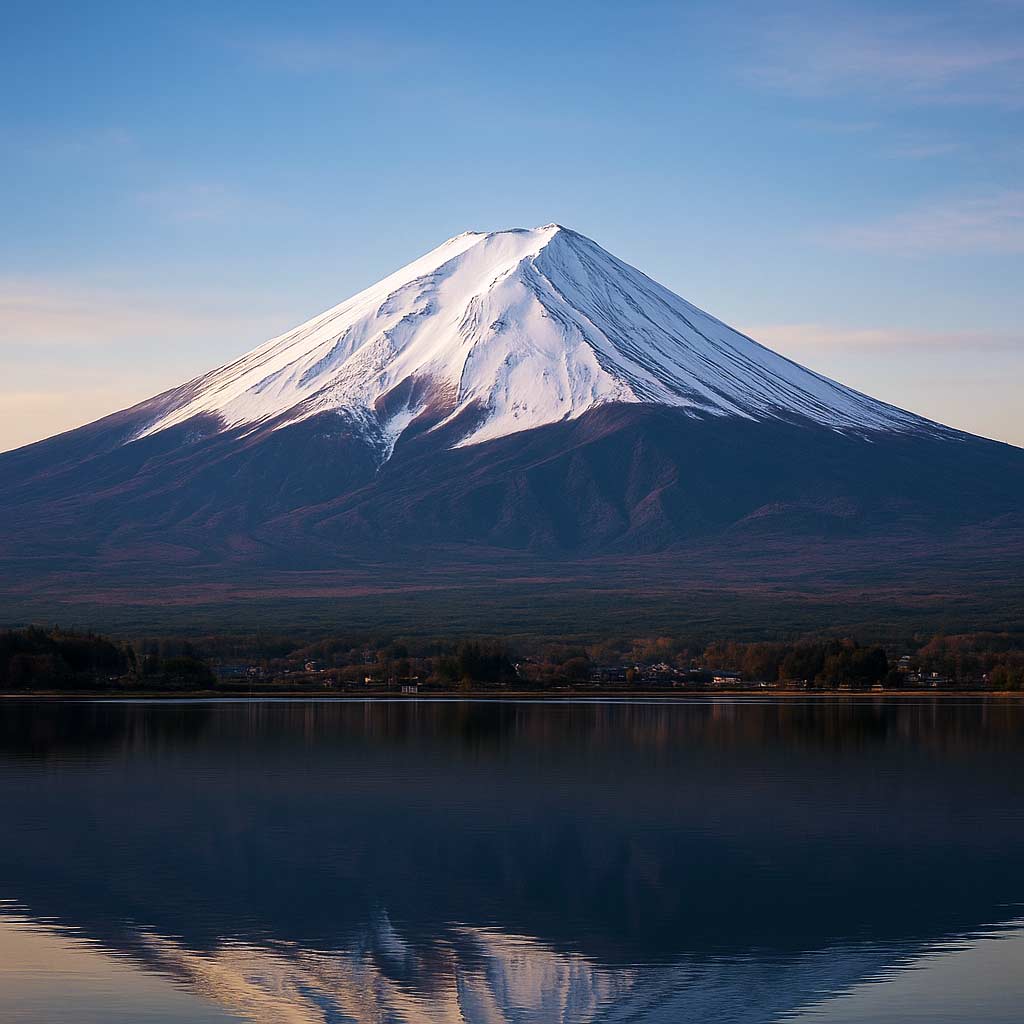
Today, Mount Fuji is a UNESCO World Heritage Site, recognized not only for its physical beauty but also for its cultural significance. It’s been painted, photographed, climbed, and written about endlessly, yet it never loses its mystique. Tourists flock to Lake Kawaguchi for postcard-perfect reflections, while locals still revere it with a quiet sense of respect.
Fuji also serves as a national symbol—appearing on yen notes, company logos, and even emojis. It represents endurance, harmony, and Japan’s connection to nature.
Fire and Ice
In many ways, the story of Mount Fuji is the story of Japan itself: balancing innovation and tradition, calmness and volatility, beauty and resilience. Shawn McNulty’s “Fuji” brings that tension to life through color—orange for energy and creation, blue for reflection and peace. The painting feels like a modern echo of an ancient landscape, reimagined through abstraction.
When you look at Mount Fuji, whether in person or through a painting like McNulty’s, you see more than a mountain. You see time itself—an ancient being that has shaped the land and the imagination of millions. It’s a reminder that beneath tranquility often lies tremendous power, and that beauty often emerges from balance.
So the next time you catch a glimpse of Fuji’s silhouette, imagine the quiet fire beneath the snow. Think of how it stands between worlds: earth and sky, fire and ice, serenity and chaos. Like McNulty’s painting, it doesn’t just depict a place—it captures an idea, a feeling, and a timeless pulse that continues to move through both nature and art.
In every sense, Mount Fuji remains alive.