
The flutter kick might sound like something you’d do while swimming through tropical waters, but it’s actually one of the most effective core and lower-body exercises you can do anywhere — no pool required. It’s simple, it’s efficient, and it brings a surprising burn to your abs, hips, and legs. On this page, we’re pairing this energetic movement with “Flutter” — a pink and blue abstract painting by Shawn McNulty. The artwork, with its vibrant bursts of color and kinetic brushwork, captures the same sense of motion and rhythm that makes flutter kicks such a lively and engaging exercise. Let’s dive into what this move is all about, how to do it right, and why it’s worth adding to your fitness routine.
What Is the Flutter Kick?
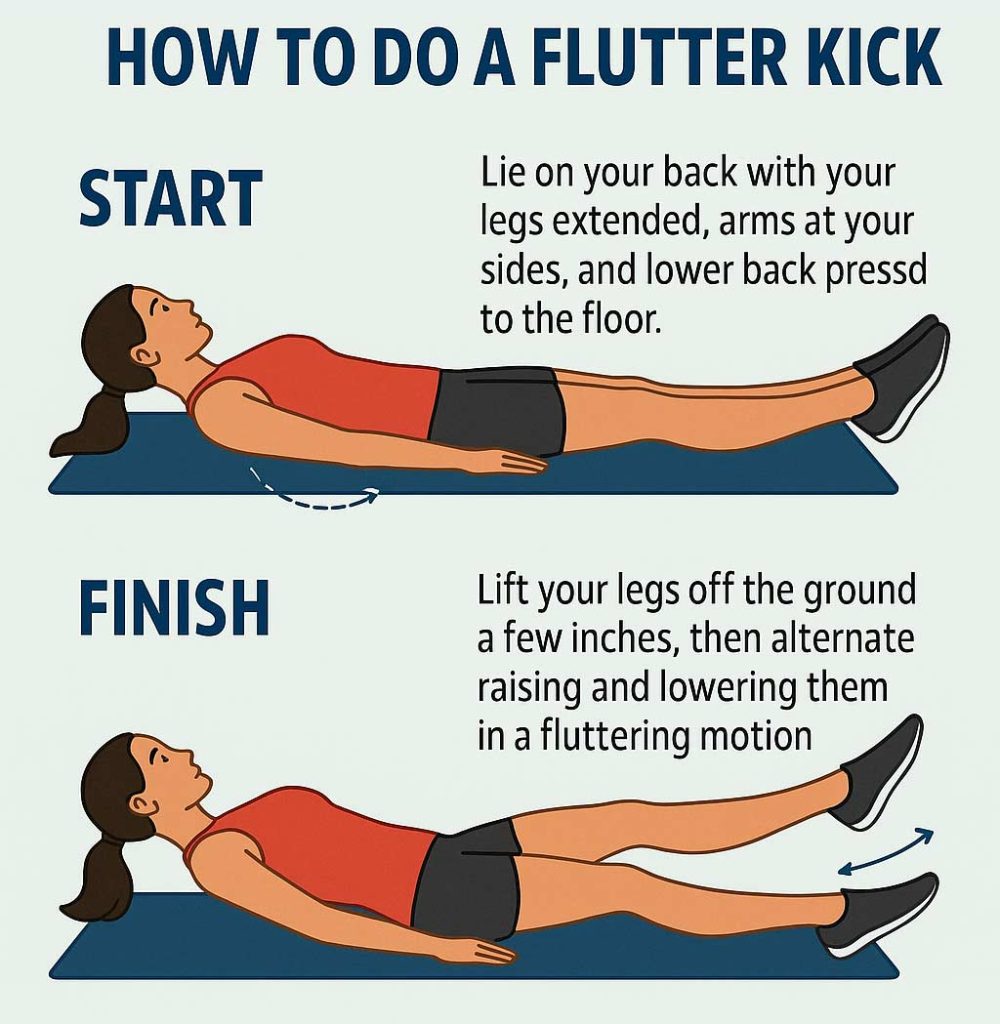
At its core, the flutter kick is a rhythmic, alternating leg movement that mimics the motion you’d use while swimming freestyle or backstroke. You lie flat on your back (or sometimes your stomach, depending on the variation), lift your legs slightly off the ground, and quickly kick them up and down in a small, controlled range of motion.
It looks simple — and it is — but the magic is in how it engages your core to stabilize your body while your legs are in constant motion. The result? A serious challenge for your abs, hip flexors, quads, and even your lower back muscles. The best part: it doesn’t require any equipment. Just a mat, a little space, and some determination.
How to Do the Flutter Kick (Step-by-Step)
Let’s break down the flutter kick into simple, easy-to-follow steps so you can do it safely and effectively:
- Find Your Space
Lay down on a flat surface — a yoga mat or carpet works great. You’ll want enough room to extend your legs fully. - Position Your Body
Lie on your back with your arms resting at your sides, palms down. Some people prefer to tuck their hands slightly under their hips for added lower back support — that’s totally fine too. - Engage Your Core
Before you even move your legs, tighten your core muscles. Imagine pulling your belly button down toward the floor. This step is key because it keeps your lower back from arching too much during the exercise. - Lift Your Legs
Raise both legs off the ground about 6–12 inches. They should hover just above the floor, with your toes pointed away from you. - Start Fluttering
Begin to alternate kicking your legs up and down in a quick, controlled motion — like you’re swimming in the air. Keep your knees mostly straight but not locked. The movement should come from your hips, not your knees. - Control Your Breathing
Don’t hold your breath! Breathe steadily throughout the movement — inhale through your nose, exhale through your mouth. - Keep Going (and Going)
Aim for 20–30 seconds of flutter kicks to start, then rest. You can build up to longer intervals or multiple sets as you get stronger.
Common Mistakes to Avoid
While flutter kicks look simple, there are a few common mistakes that can make the exercise less effective (and even risky for your lower back):
- Arching your back: If your lower back lifts off the floor, you’re putting unnecessary strain on your spine. Tighten your core and reduce your range of motion if needed.
- Moving too fast: Flutter kicks should be quick but controlled. Flailing your legs wildly doesn’t engage your muscles properly.
- Holding your breath: You need oxygen for endurance — steady breathing helps keep your muscles firing.
- Lifting legs too high: The challenge comes from staying close to the floor. If you lift your legs too high, you reduce core tension.
The Benefits of Flutter Kicks
Now that you know how to do them right, let’s talk about why flutter kicks deserve a spot in your fitness routine.
1. Core Strength
Flutter kicks are a core-focused powerhouse. They target your rectus abdominis (the “six-pack” muscle), your transverse abdominis (the deep stabilizer), and your obliques. The constant tension keeps your abs engaged for the entire duration, improving both strength and endurance.
2. Lower Body Toning
In addition to your core, flutter kicks work your hip flexors, quads, and glutes. This makes them a great addition to leg day or as a finisher after a full-body workout.
3. Improved Stability and Balance
Your body has to stabilize itself while your legs are moving in opposite directions. That means your smaller stabilizer muscles — especially around your pelvis and spine — get a workout too. Over time, this translates to better posture and balance.
4. Cardio Boost
Do flutter kicks in fast, timed intervals and you’ll notice your heart rate climb. That means you’re sneaking in a mini cardio workout while sculpting your core — a win-win combo.
5. No Equipment Needed
You can do flutter kicks anywhere — at home, at the gym, or even on vacation. All you need is a bit of floor space and motivation.
6. Great for Swimmers and Runners
The motion of flutter kicks mirrors the kicking used in swimming, helping improve leg endurance and flexibility. Runners also benefit because stronger hip flexors and core stability translate to better stride control.
Variations to Try
If you want to keep things interesting (and challenging), here are a few fun flutter kick variations:
- Weighted Flutter Kicks: Hold a small dumbbell or medicine ball above your chest to add upper body engagement.
- Flutter Kicks with a Crunch: Combine flutter kicks with small crunches for an even deeper core burn.
- Vertical Flutter Kicks: Try doing them standing with resistance bands for a low-impact variation.
- Reverse Flutter Kicks: Lie face down and lift your legs slightly off the ground while fluttering. This version targets your glutes and lower back.
How “Flutter” by Shawn McNulty Connects to the Movement
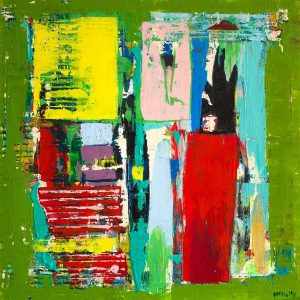
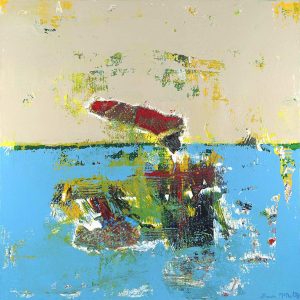
The “Flutter” painting by Shawn McNulty embodies the same energy and vibrancy as the flutter kick itself. With lively pink and blue tones swirling and colliding across the canvas, it captures a sense of motion and flow — almost like the rhythmic beat of your legs moving through the air. The painting’s energy is kinetic and spontaneous, much like the way your muscles fire in harmony during a good flutter kick session.
There’s something poetic about pairing art and exercise — both rely on rhythm, control, and release. McNulty’s painting feels alive with movement, suggesting the pulse and vibration of physical effort. The pink hues might even symbolize the warmth and energy your body generates mid-workout, while the blue brings a cooling, refreshing sense of balance — a perfect visual metaphor for “fire and flow.”



Wrapping It Up
The flutter kick may look small, but its impact is anything but. It’s an easy-to-learn move that strengthens your abs, tones your legs, and fires up your core — all while improving your endurance and stability. Whether you’re adding it to your workout routine or just looking for a quick at-home ab burner, this classic exercise delivers.
And as you look at “Flutter” by Shawn McNulty — with its explosive energy and motion-filled colors — think of the exercise it represents. Both the painting and the movement are expressions of rhythm, control, and power. One captures it on canvas, the other in motion.
So roll out your mat, lift those legs, and flutter away — your body (and maybe your inner artist) will thank you.